COSMOS Debuts New Capabilities to Enable Wireless Research in Upper Mid-Band in Collaboration with Pi-Radio
The COSMOS testbed now includes software-defined radios (SDRs) that operate above 6 GHz, supporting FR3 frequency bands in the 7-24 GHz range, otherwise known as the upper mid-band.
The new hardware enables researchers to run full 5G/6G software stacks in FR3 bands and conduct channel sounding and integrated sensing and communications (ISAC) experiments. The FR3 radios tie into COSMOS’s software-defined network (SDN) transport and edge computing, supporting low-latency, closed-loop experiments for potential city-scale deployment.
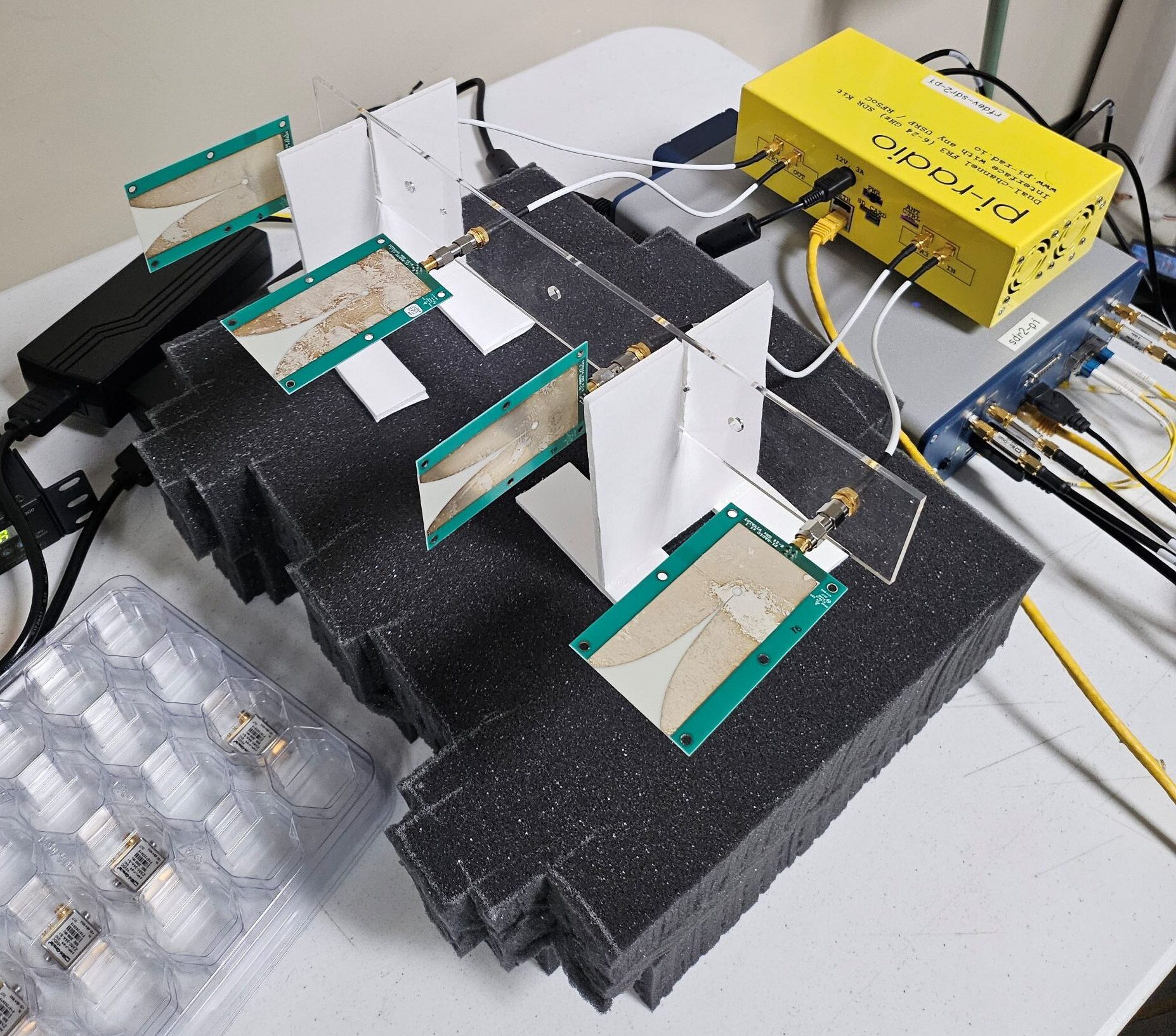
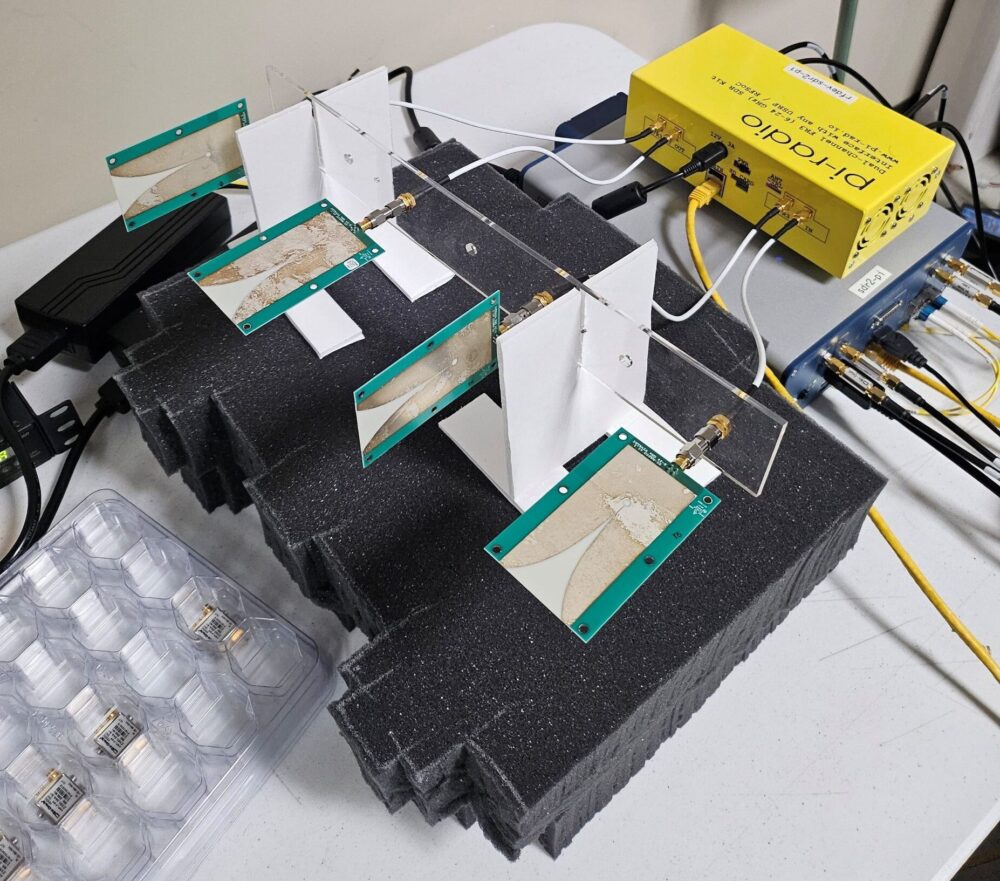
The SDR technology is enabled by a collaboration between COSMOS and Pi-Radio. Pi-Radio designed the RF frontend for the SDR, providing 2×2 transmit and receive capabilities.
More information and tutorials are available on how to use this platform feature, including documentation for enabling:
Why It Matters
- The COSMOS testbed enables experimentation with communications and sensing applications in the 7-24 GHz bands, which is of growing interest to the wireless research community.
- The new platform feature also supports wideband signaling and precise gain/LO control, which is ideal for studying coexistence opportunities and potential prototyping in the FR3 frequency bands.
- Because these bands are well-suited for 6G development, Wi-Fi expansion, and military and other government applications, the information researchers can glean from COSMOS is crucial for informing next-generation wireless technology strategies and innovation.
About COSMOS
COSMOS is part of the National Science Foundation’s PAWR program and is funded in part by NSF and by the PAWR Industry Consortium.