Autonomous Self-Healing UAV Swarms for Robust 6G Non-Terrestrial Networks
As wireless networks shift away from traditional infrastructure and non-terrestrial networks expand as a global connectivity solution, unmanned aerial vehicles (UAVs) have the potential to provide resilient, cost-effective coverage for hard-to-reach areas, in disaster recovery, and in remote military communications. This effect can be achieved through a combination of autonomous operations and the spatial diversity afforded by multiple drones acting in concert.

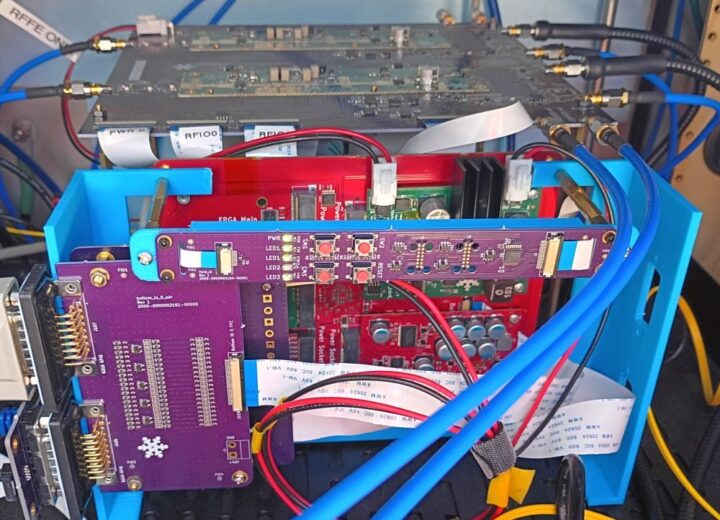
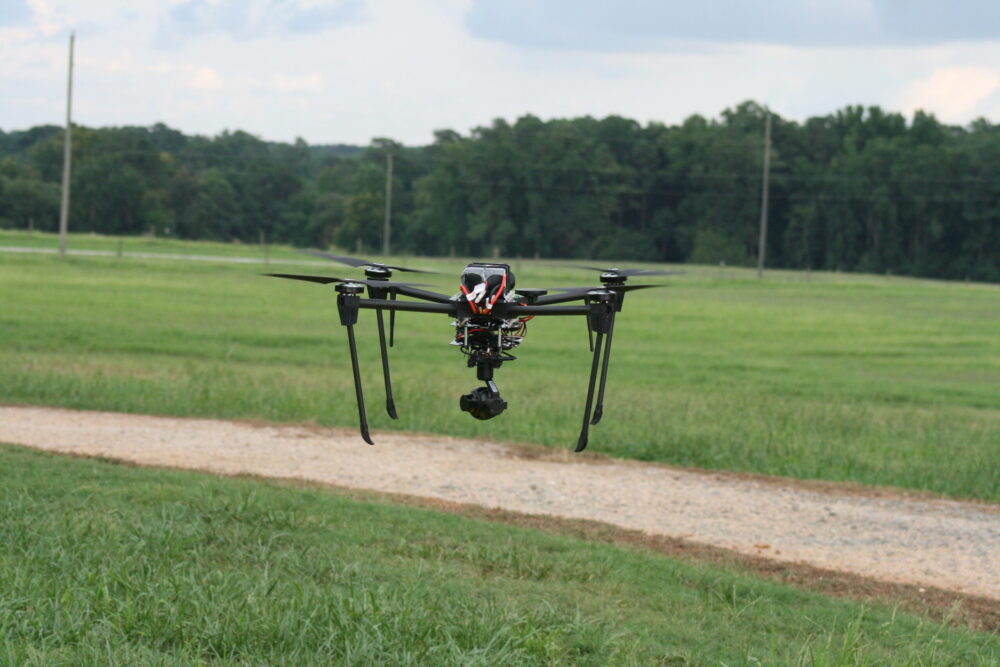
A team of researchers from North Carolina State, Lockheed Martin, and Air Force Research Lab (AFRL) in Rome, New York, tested the concept of a self-healing UAV network with the goal of ensuring system reliability under adverse conditions where manual intervention is not feasible. The research team progressed from testing network algorithms in an indoor lab to outdoor experimentation with radios on tripods and finally to validation with UAVs flown on the AERPAW testbed.
At AERPAW, the final tests were performed using two moving drones acting as receivers and a single fixed transmitter. The researchers established device-to-device signaling between the UAVs to enable communication and coordination and to evaluate the effectiveness of their algorithms.
The results of the multiple experiments demonstrate that a resilient, adaptive, self-healing network design (RASHND) significantly enhances the reliability and interference resilience of UAV networks, making it well-suited for critical communications.
Why it Matters
- Algorithmically driven networks can identify and correct connectivity issues under the complex environments in which UAVs operate.
- Networks configured across multiple UAVs can leverage swarm configurations to minimize the impact of interference – including by signal jammers – on wireless performance.
- By using the AERPAW drone testbed, researchers evaluated the effectiveness of RASHND for UAVs in real-world scenarios.
- As UAV networks continue to proliferate, testing and research in authentic environments are essential to ensuring next-generation wireless technologies can keep up.
Read more about this experiment conducted on the AERPAW testbed.
Authors: Erik Blasch (Air Force Research Lab), Liang C Chu (Lockheed Martin Space), Sambrama Hegde, Venkata Srirama Rohit Kantheti, and Shih-Chun Lin (North Carolina State University)
About AERPAW
AERPAW is part of the National Science Foundation’s PAWR program, and is funded in part by NSF award CNS-1939334, and by the PAWR Industry Consortium.