O-RAN Energy Saving Use Case Demonstration
Introduction
This video introduces an O-RAN (Open Radio Access Network) energy-saving use case, highlighting how programmable RAN architectures can dynamically optimize network operations through automated control. By reducing power consumption without sacrificing performance, the demonstration shows how O-RAN can help operators improve efficiency and lower operational costs. It positions O-RAN as a key enabler of more energy-efficient and flexible wireless networks.
Summary
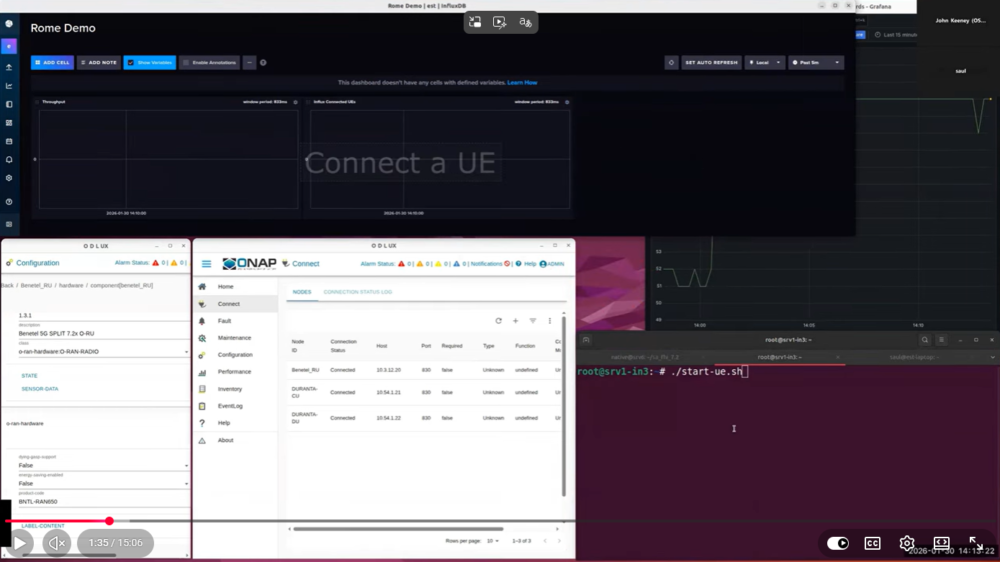
The demonstration showcases an open-source O-RAN ecosystem integrating components such as OAI, ONAP, and other RAN functions, coordinated through an rApp that monitors network activity and triggers energy-saving actions. As traffic decreases, the system automatically transitions network elements into lower-power states, demonstrating how software-driven automation can reduce energy consumption compared to active operation.
Key Takeaways
- Dynamic Response: Network components can automatically reduce power when traffic is low.
- Open Integration: Interoperability across O-RAN components enables coordinated energy management.
- Efficiency: rApp-based automation optimizes energy use based on network conditions, improving operational efficiency.
- Strategic Value: O-RAN provides a practical path for operators to enhance efficiency through intelligent, software-driven control.
Why This Matters
- Industry Challenge: Mobile networks face increasing energy demands and cost pressures.
- O-RAN Advantage: Open and programmable architectures enable more flexible and efficient energy management compared to traditional RAN systems.