AERPAW Introduces Drones as Mobile Base Stations
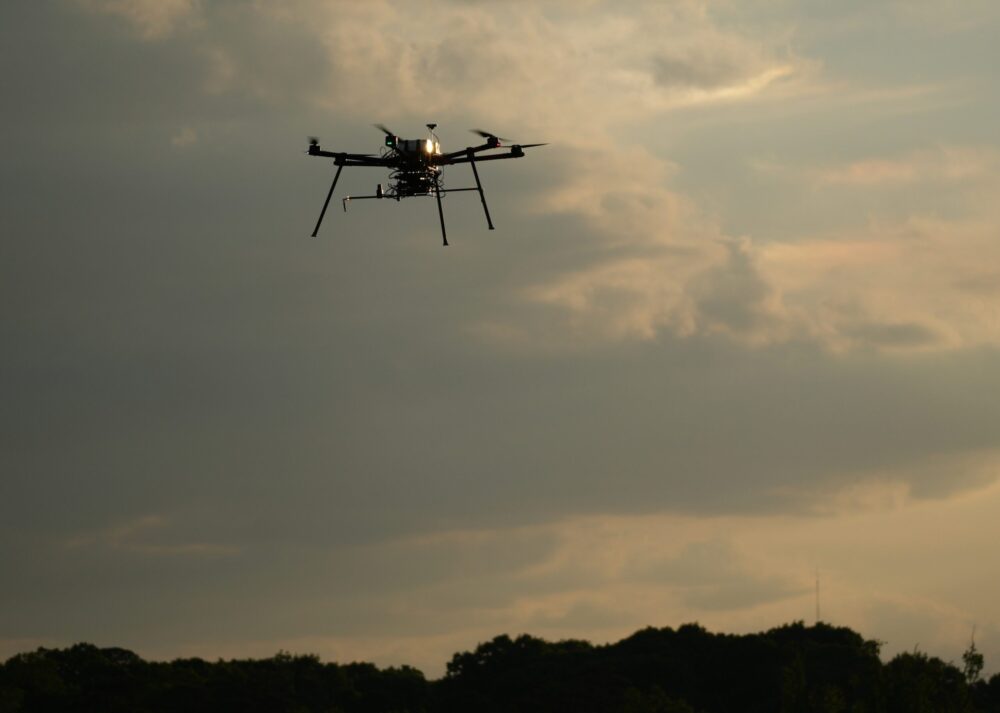
Unmanned aerial vehicles (UAVs) typically rely on wireless communications to support command and control functions. However, drones can also be used as network nodes in their own right, transmitting signals from the air to extend wireless coverage on the ground. With its latest feature release, AERPAW now supports experiments using UAVs as base stations operating on an open source wireless software stack.
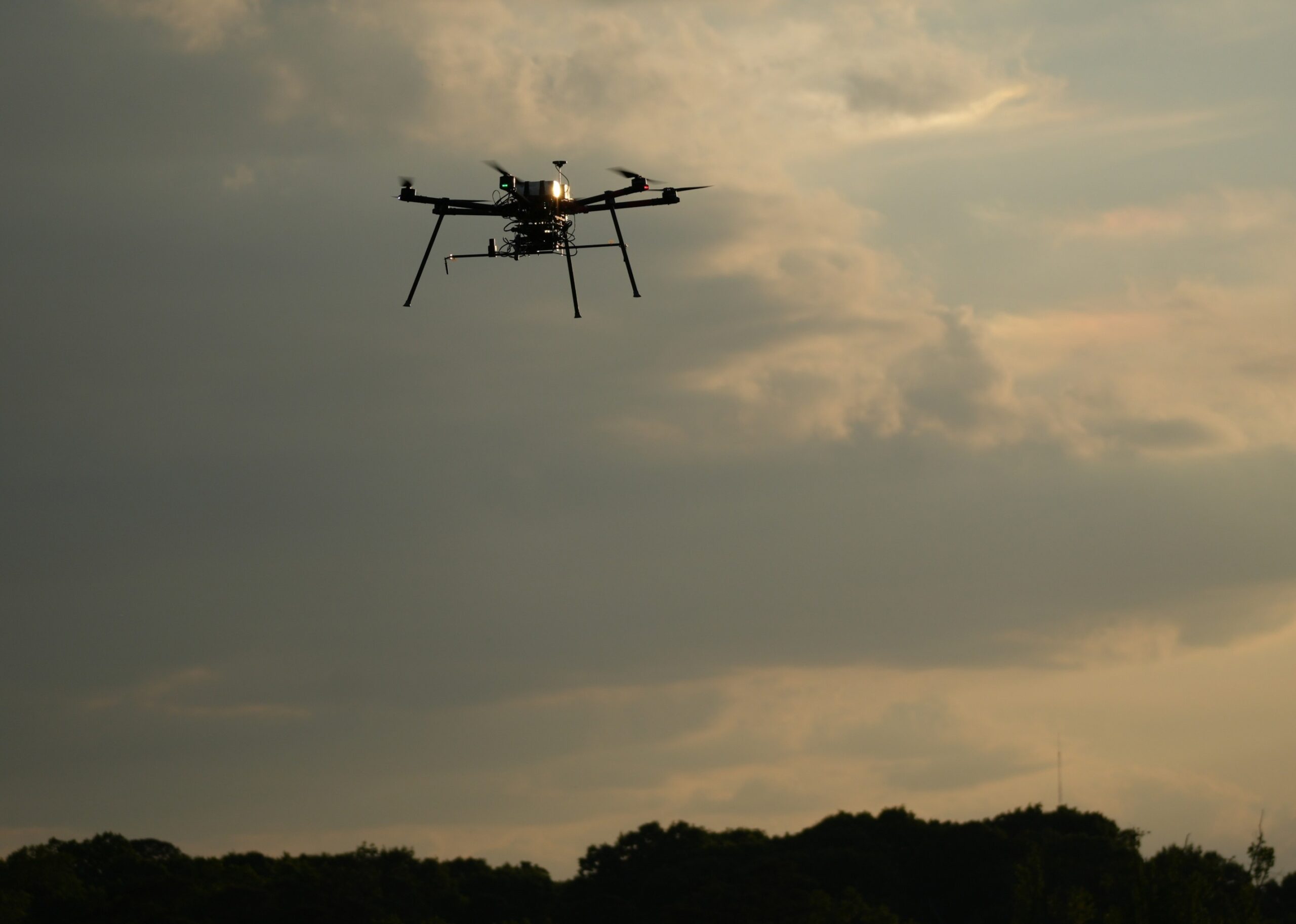
As with most projects on AERPAW, the UAV-as-base-station experiment can operate in both emulation and testbed mode. Users can create an end-to-end LTE network with a simulated eNodeB traveling between two user endpoints. Post simulation run, users can then take their experiment to the outdoor testbed and fly a drone with an eNodeB on board and transmitting signals to UE locations.
This new drone experiment configuration collects data including latency, throughput, and packet loss. By default, the experiment runs in the 3.3-3.55 GHz spectrum band.
For more information on testing drones as mobile base stations, visit the AERPAW user manual. For information research taking place at AERPAW, visit the AERPAW user stories page.